

Fall Composite Deck Care: How to Prep Your Composite Deck for a Midwest Winter


Every fall, we hear from homeowners who figure a composite deck can ride out winter with no attention at all. Composite is low-maintenance, but it isn't no-maintenance, and most of the scratches, stains, and ice problems we see in April trace back to a few small things that got skipped in October. So what does your deck actually need before a North Dakota winter? After 37 years of building and supplying decks in the Red River Valley, and a close read of the manufacturers' own care guides, we've boiled it down to a simple afternoon project anyone can handle.
Quick answer: how do you prepare a composite deck for winter?
Clear everything off the deck, sweep out leaves and debris (including the gaps between boards), then wash one section at a time with warm water, mild dish soap, and a nylon brush, rinsing right away with a garden hose. Skip the pressure washer. Before the snow flies, pick up rubber-backed mats, grab a plastic shovel with no metal edge, stock calcium chloride ice melt instead of rock salt, and take ten minutes to check your railings, stairs, and drainage.
What you'll need
Here's what most homeowners don't realize: you probably already own everything on this list. No specialty cleaners required.
A garden hose with a spray nozzle
A 5-gallon bucket
Mild, bleach-free dish soap
A soft-to-medium nylon-bristle deck brush on an extension handle
A push broom or leaf blower
A plastic putty knife for cleaning out board gaps
Cotton towels or a sponge mop for drying

Step 1: Clear the deck (and lift, don't drag)
Start by taking everything off the deck: furniture, planters, grills, hoses, and toys. This is where we see a lot of accidental damage. Sliding a chair or dragging a heavy planter across the boards can leave scratches that won't wash out. Always lift and carry.
While the deck is empty, wash any railings, windows, and doors around it first. That way, drips land on boards you haven't cleaned yet.

Before-winter checklist:
Pick up rubber-backed mats and outdoor rugs (Trex cautions that rubber-backed mats can discolor composite)
Move planters, or set them on feet so air can circulate underneath
Store patio furniture, or cover it somewhere you won't need to shovel
Wipe up grill grease and food spills now instead of letting them sit all winter
Ask yourself: What's been sitting in the same spot on your deck since June? That's the first thing to move.
Step 2: Sweep out the leaves before they leave a mark
Wet leaves don't just look messy. As they break down, they release tannins that can stain the surface of your boards, and piles of damp debris hold moisture that feeds mold and mildew.

Sweep with a push broom or use a leaf blower, and don't forget the gaps between the boards. Those spaces are there so water can drain and air can move underneath. When they pack full of debris, water sits on the surface and freezes. Once the deck is swept, look for any trouble spots, like stains or heavy buildup, that will need a little extra attention when you wash.

Try this at home: Pour a cup of water on a few spots across your deck. If it pools instead of draining through the gaps, run a plastic putty knife down those seams to clear them out.
Step 3: Wash with mild soap, one section at a time
You don't need a specialty cleaner for a seasonal wash. A few squirts of mild, bleach-free dish soap in a bucket of warm water does the job on any capped composite deck. The secret isn't the soap. It's the process.
Divide the deck into sections. Start at the far end and work toward your door, so you never have to walk across an area you've already cleaned.
Scrub with the nylon brush. Apply the soapy water generously and scrub with the grain of the boards, then across it.
Rinse right away. Don't let the soap dry on the surface. Rinse each section with the garden hose, working in the direction of the boards, and keep the spray off your railings and windows.
Repeat section by section until you've covered the whole deck.
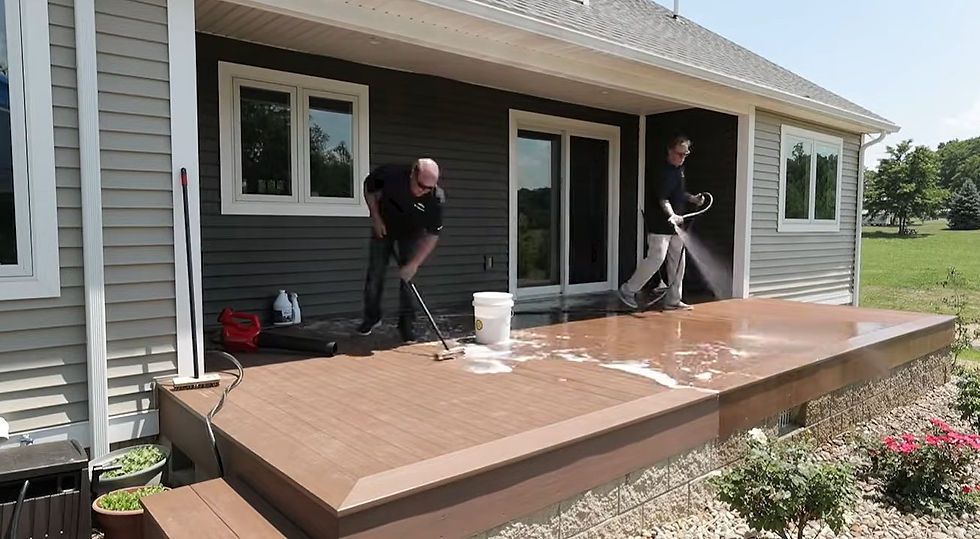
If you're cleaning on a hot, sunny afternoon: Keep your sections smaller. Soap dries fast in direct sun, and if it dries on the boards it can leave a white film, which means washing that section again. A cloudy day or a shady afternoon is your friend here.
Dry it and take a second look
Wet boards hide spots you missed. Once you've rinsed, towel off any standing water or run a sponge mop across the deck, working along the length of the boards. When everything is dry, walk the deck one more time and spot-clean anything that still needs it.

Want to see the process in action? This walkthrough shows each step. We keep it even simpler: use a bucket of warm water with mild, bleach-free dish soap in place of the cleaner shown, and leave the pressure washer in the garage.
Have older boards? If your deck has early-generation or uncapped composite boards, check the manufacturer's care guide first, since those follow different cleaning rules. Not sure what you have? Send us a photo and we'll help you figure it out.
Step 4: Why we tell homeowners to skip the pressure washer
This is one of the most common questions we get, and our answer is simple: leave it in the garage. Both major composite manufacturers allow pressure washing only within tight limits. Trex caps it at 3,100 psi with a fan tip held at least 8 inches away, and only on certain product lines. TimberTech allows a power washer for rinsing only, at no more than 1,500 psi. Go beyond those limits and you risk damaging the boards and your warranty.
There's a second risk most people never think about: setting the machine itself on the deck. Vibration and rubber tires, especially on gas-powered units, can leave black scuff marks that are very hard to remove.

Ask yourself: Do you know which board line is on your deck and when it was installed? If not, stick with soap, a brush, and a hose.
Step 5: Plan your snow removal before the first storm
Snow removal is where we see the most avoidable winter damage. Metal shovels, and even plastic shovels with a metal leading edge, will scratch the surface. On ice melt, the manufacturers differ: Trex allows calcium chloride or rock salt, while TimberTech says to avoid rock salt. The safe bet for any composite deck is calcium chloride.
Your winter snow checklist:
Use a plastic shovel with no metal edge
Push snow in the direction of the boards, not across them
Use calcium chloride ice melt only, and skip the rock salt
Never chip at ice with a metal tool or scraper
Expect a little white residue, and wash it off with soap and water once it warms up in spring
Step 6: Take a 10-minute walk-around
The boards may be composite, but most decks sit on pressure-treated wood framing, and that's where small problems start. Before winter, take a few minutes to check the structure.
Walk-around checklist:
Give the railings and posts a firm push. Do you feel any wobble?
Check the stairs for loose or shifting treads
Watch where your gutters and downspouts drain. Water dumping onto the deck will freeze into a sheet of ice
Look at the ledger board, where the deck attaches to the house, for signs of water getting behind it
Anything you find now is much easier to fix in October than in April. If something doesn't look right, give us a call and one of our specialists can take a look.
A situation we see every spring
What the homeowner wanted: A deck that still looked new after its first few winters, without spending weekends on upkeep.
What went wrong: The deck was shoveled all winter with a steel-edged shovel, and rock salt went down on every icy morning. A rubber-backed welcome mat sat by the patio door from November to April. By spring, there were scuff lines along the main walking path, a white film across the boards, and a lighter rectangle where the mat had been.
What we recommend: Wash off the residue with warm, soapy water and a nylon brush, then switch to a plastic shovel with no metal edge and calcium chloride ice melt. Pick up rugs and rubber-backed mats every fall.
The solution: The residue cleans up with soap and water. Deep scratches in the protective cap layer are much harder to fix, which is why the right shovel matters so much.
The results: When homeowners make those three changes, spring cleanup usually comes down to a hose, a brush, and about an hour on a Saturday.
Frequently asked questions about fall composite deck care
What is the best way to clean composite decking?
Rinse the deck with a garden hose, scrub with warm water, a small amount of mild, bleach-free dish soap, and a soft-to-medium nylon-bristle brush, then rinse thoroughly. Work in small sections and don't let the soapy water dry on the boards.
Can you pressure wash Trex or TimberTech decking?
Both brands allow it only within strict limits: up to 3,100 psi on certain Trex lines and up to 1,500 psi for rinsing only on TimberTech. We recommend skipping the pressure washer. A garden hose and a brush clean the deck without risking damage or your warranty.
What kind of brush should I use on composite decking?
A soft-to-medium synthetic (nylon) bristle deck brush. Avoid wire brushes, and avoid stiff natural-fiber brushes, which are meant for PVC decking and can dull composite surfaces.
What ice melt is safe for composite decking?
Calcium chloride ice melt is safe for both Trex and TimberTech. Trex also allows rock salt, but TimberTech says to avoid it, so calcium chloride is the safe choice for any composite deck. Rinse off any white residue in spring.
Can I use a metal shovel on a composite deck?
No. Metal shovels, and plastic shovels with a metal leading edge, will damage the surface. Use an all-plastic shovel and push snow in the direction of the boards.
Do I need to seal or stain composite decking before winter?
No. Capped composite decking does not need sealing or staining. Fall care is about cleaning, clearing debris, and protecting the surface during snow removal.
Key takeaways

Clear the deck by lifting, never dragging, and sweep out leaves and board gaps so your deck drains and doesn't stain.
Wash one section at a time with mild dish soap, a nylon brush, and a garden hose, rinsing right away.
Skip the pressure washer. A hose does the job with zero risk.
Pick up rubber-backed mats and planters, shovel with plastic only, and stick with calcium chloride ice melt.
Take ten minutes to check railings, stairs, drainage, and the ledger board before winter.
Questions? We're here to help.
If you ever have questions about caring for your deck, contact Deckmasters. One of our specialists is more than happy to guide you. Not sure which boards you have, or whether that spot is a stain or something more? You can also stop by the Deckmasters Supply Store, and we will get you in the right direction.


Comments