

Cheap Composite vs Premium Composite: What You Notice After One Summer

Why This Conversation Happens Every Year
Most composite decking looks pretty good on day one.
That is what makes this decision difficult.
When samples are small and everything is brand new, the differences between lower-cost and premium composite boards are not always obvious.
But after one summer?
That is usually when homeowners start noticing what they actually bought.
The Problem With Comparing Deck Boards in a Showroom
A small sample only tells part of the story.
What matters is how the product behaves after:
Heat
Sun exposure
Foot traffic
Grilling season
A full Midwest summer
That is when the real differences begin to show up.
What We See With Lower-Cost Composite
Not every budget board is bad.
But lower-cost composite products often make compromises somewhere.
Sometimes it is the cap layer. Sometimes the density of the board. Sometimes consistency in manufacturing.
Here is what homeowners tend to notice first after a season or two:
More surface fading
More expansion and contraction
Boards feeling hotter in direct sun
More visible scratching or wear
Less consistent color from board to board
None of those things necessarily mean the deck failed.
But they do change how the deck looks and feels over time.
Expansion and Movement Become More Noticeable
This is one of the biggest differences we see.
Cheaper composite boards often move more during temperature swings.
In North Dakota and Minnesota, that matters.
A cool spring morning and a hot July afternoon can create a huge temperature difference on the same deck.
When boards expand and contract more aggressively, homeowners may start noticing:
Uneven gaps
Slight waviness
Fastener stress
Movement around stairs and seams
Premium products tend to stay more consistent through those seasonal swings.
Surface Heat Is a Real Conversation
All composite decking gets warm in direct sunlight.
That is just reality.
But some products handle heat better than others.
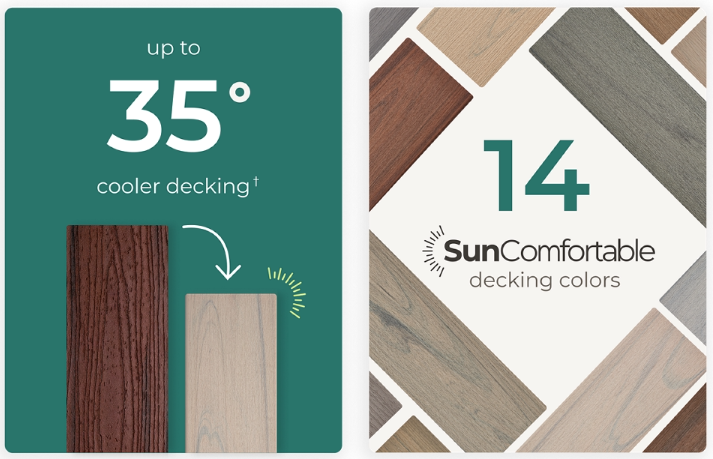
Higher-end lines often include better heat-reflective technology and more advanced cap materials.
That does not make them cold.
It just helps make the surface more comfortable during peak summer conditions.
This is especially important for families with kids, pets, or decks that face full afternoon sun.
Color Consistency Matters Over Time
One thing homeowners rarely think about upfront is long-term color consistency.
Lower-end composite products sometimes develop uneven weathering patterns more quickly.
Premium boards generally hold color better and maintain a more natural appearance over time.
That difference becomes noticeable faster than people expect.
Especially on larger decks.
What Most Homeowners Actually Regret
Interestingly, most homeowners do not regret spending money on the deck itself.
The regret usually comes from wishing they had upgraded certain materials while the project was already happening.
That conversation comes up often with composite decking.
Once the structure, labor, and project logistics are already in place, the cost difference between entry-level and premium boards sometimes feels smaller in hindsight.
This Doesn’t Mean Everyone Needs the Most Expensive Board
There is still a place for budget-conscious products.
Not every homeowner needs the top-tier line.
The better question is:
What are your expectations long term?
If the goal is simply low maintenance at the most affordable price point, an entry-level composite product may make sense.
If long-term appearance, comfort, and consistency matter most, premium products usually justify the investment over time.
What We Tell Homeowners
After 37 years in the industry, here is what we have learned.
Most decking decisions feel similar during the planning stage.
The differences become clearer after real use.
Sun. Traffic. Heat. Time.
That is when product quality starts separating itself.
Key Takeaways
Most composite decking looks similar when brand new
Heat, movement, and wear become more noticeable after real use
Premium composite boards typically offer better stability and color consistency
Lower-cost boards may show fading, movement, and wear sooner
The best choice depends on your expectations and how long you plan to stay in the home
Final Thought
A deck is not just a one-season purchase.
It is something you live with every day.
That is why it helps to think beyond what looks good on the sample board and focus on how the product will actually perform after a few summers in the Midwest.
If you want to compare composite options side by side, our team at Deckmasters can walk you through real differences we see in the field and help you understand what makes sense for your home and budget.

Comments